Dry Ice Blasting for Car Undercarriage Cleaning & Restoration
A vehicle’s undercarriage is constantly exposed to road dirt, grease, oil, moisture, and environmental contaminants. Over time, these materials accumulate around the chassis, suspension, wheel wells, and other underbody components, making maintenance and restoration more difficult.
For classic car restoration specialists, automotive detailers, and professional workshops, cleaning the undercarriage is an important step in evaluating a vehicle’s condition and preserving its components.
Traditional cleaning methods include pressure washing, chemical degreasing, manual scrubbing, and abrasive blasting. While these techniques can be effective, they may introduce water, require extensive cleanup, or remove protective coatings when used incorrectly.
Dry ice blasting undercarriage components offers an alternative cleaning approach that uses solid carbon dioxide pellets and compressed air to remove accumulated contamination without introducing water or conventional abrasive blasting media.
This guide explores how dry ice undercarriage cleaning works, its benefits, suitable applications, limitations, and the equipment considerations for professional automotive restoration.
What Is Dry Ice Blasting for Car Undercarriage Cleaning?
Dry ice blasting is a cleaning process that uses compressed air to propel solid carbon dioxide (CO₂) pellets toward a contaminated surface.
When the pellets strike the surface, they transfer energy and rapidly sublimate, changing directly from solid carbon dioxide into gas. This process helps loosen and dislodge dirt, grease, and other contaminants.
Unlike sandblasting, dry ice blasting does not rely on conventional abrasive particles to remove material from a surface.
It also does not require water as its cleaning medium, making it useful for certain automotive applications where minimizing moisture exposure is important.
During car underbody dry ice blasting, operators direct the cleaning stream toward suitable components such as chassis rails, suspension assemblies, metal housings, and wheel well surfaces.
The process can help reveal the condition of underlying materials without intentionally stripping sound coatings.
However, the cleaning results and surface compatibility depend on the equipment settings, contamination, and condition of the components being cleaned.
Why Use Dry Ice Blasting for Undercarriage Cleaning?
1. Removes Road Grime, Oil, and Grease
The underside of a vehicle collects contaminants from both the road and its mechanical systems.
Common deposits include:
- Road dirt and accumulated dust
- Oil and grease from mechanical components
- Mud and dried soil
- Oily deposits around suspension assemblies
- Residue around transmission and differential housings
- Contamination on chassis brackets and mounting points
Dry ice blasting can help loosen and remove many of these deposits from suitable surfaces.
This allows restoration professionals to inspect components more clearly and identify areas requiring additional maintenance.
Cleaning effectiveness varies depending on the contamination, its adhesion, and the operating settings.
2. Minimizes Water Exposure
Pressure washing is commonly used for vehicle undercarriage cleaning.
However, introducing water into an older vehicle’s underbody can create concerns when working around vulnerable metal, aging seals, electrical connectors, or existing corrosion.
Dry ice blasting does not use water as its cleaning medium.
This may be particularly useful for classic vehicles where preserving original components and minimizing moisture exposure are priorities.
Nevertheless, operators should still consider condensation, temperature changes, and the condition of the materials being cleaned.
3. Helps Preserve Original Underbody Finishes
Many classic and collectible vehicles retain original underbody coatings, paint, factory markings, and other details that contribute to their historical authenticity.
Aggressive abrasive cleaning methods may remove these features.
Dry ice blasting is generally less abrasive than conventional abrasive blasting and can be useful for removing surface contamination while attempting to preserve sound underlying finishes.
However, deteriorated undercoating, loose paint, aging sealants, and poorly adhered coatings may still be damaged.
Restoration professionals should test a small area before proceeding with broader cleaning.
4. Improves Visibility for Chassis Inspection
Heavy dirt and grease can conceal damage or make it difficult to evaluate the condition of a vehicle’s undercarriage.
Cleaning appropriate surfaces can help reveal:
- Corrosion and rust development
- Oil leaks
- Damaged brackets
- Deteriorated protective coatings
- Worn suspension components
- Areas requiring repair or further inspection
Dry ice blasting does not repair these issues, but it can support more accurate visual inspections by removing accumulated contamination.
5. Reduces Manual Cleaning in Hard-to-Reach Areas
Undercarriage components often contain tight spaces, brackets, recesses, and irregular surfaces that are difficult to clean manually.
Dry ice blasting can help access some of these areas without requiring extensive scrubbing.
Depending on the vehicle and equipment configuration, certain components may be cleaned while remaining installed.
However, adequate access, safe positioning, and proper containment are still necessary.
Which Undercarriage Components Can Be Cleaned With Dry Ice Blasting?
Chassis Rails and Frame Components
Chassis rails and frame members are frequently exposed to road grime, grease, and environmental contamination.
Dry ice blasting can help clean suitable accessible surfaces, improving visibility during restoration and inspection.
Particular care should be taken around aging coatings, rusted metal, and deteriorated underbody protection.
Suspension Assemblies
Suspension components such as control arms, brackets, and mounting points may accumulate dirt, grease, and road deposits.
Dry ice blasting can help clean suitable metal surfaces while reducing the need for water-based washing.
Rubber bushings, flexible boots, protective coatings, and other vulnerable materials should be assessed before cleaning.
Wheel Wells
Wheel wells collect road dirt, mud, and oily contamination.
Dry ice blasting can help remove deposits from compatible metal and coated surfaces.
However, plastic liners, sound-deadening materials, and aged undercoatings may require lower-intensity cleaning or alternative methods.
Transmission and Differential Housings
Transmission and differential housings can develop significant oil and grease buildup.
Dry ice blasting may help clean accessible external surfaces, making inspection and maintenance easier.
Seals, vents, electrical connectors, and exposed openings must be protected as appropriate.
Exhaust System Components
Certain exhaust components may be suitable for removing loose surface dirt and deposits with dry ice blasting.
However, operators must consider component temperature, material condition, corrosion, and any coatings present.
Dry ice blasting should not be used on excessively hot or otherwise unsuitable components.
How Does the Dry Ice Undercarriage Cleaning Process Work?
Professional undercarriage cleaning should follow a controlled procedure to protect the vehicle and the operator.
Step 1: Inspect the Vehicle’s Undercarriage
Before blasting, evaluate the condition of the underbody.
Identify:
- Loose or flaking undercoating
- Exposed or damaged wiring
- Deteriorated rubber components
- Heavy corrosion
- Oil leaks
- Fragile brackets or fittings
- Openings requiring protection
- Sensitive or poorly adhered finishes
This inspection helps determine which areas can be cleaned safely and which require another method.
Step 2: Prepare the Vehicle and Work Area
Position the vehicle securely using suitable lifting equipment and approved support points.
Never work beneath a vehicle supported only by a hydraulic jack.
Ensure sufficient clearance for the operator and blasting equipment.
The workspace must have appropriate ventilation, particularly when cleaning underneath vehicles or in enclosed areas where carbon dioxide could accumulate.
Protect vulnerable components and establish a plan for collecting removed contaminants.
Step 3: Select the Appropriate Equipment Settings
Dry ice blasting equipment should be configured according to the contamination and surface condition.
Important variables include:
- Blasting pressure
- Dry ice feed rate
- Nozzle type
- Nozzle distance
- Angle of application
- Exposure time
Begin with conservative settings and test an inconspicuous area.
If the cleaning process begins removing a coating or affecting the surface, stop and reassess the method.
Step 4: Clean Suitable Underbody Surfaces
Direct the blast toward appropriate surfaces using controlled nozzle movements.
Avoid prolonged exposure to vulnerable components.
Work systematically to remove dirt, grease, and other contamination while monitoring the condition of the underlying material.
Areas with heavy corrosion, damaged coatings, or fragile components may require a different cleaning technique.
Step 5: Collect Dislodged Contamination
The dry ice pellets sublimate during blasting, leaving no spent dry ice media behind.
However, removed grease, dirt, undercoating fragments, and other contaminants remain and must be collected.
Depending on the contamination, vacuuming, containment, or additional cleanup may be required.
Step 6: Inspect the Cleaned Undercarriage
After cleaning, examine the exposed surfaces for corrosion, leaks, coating damage, and other maintenance concerns.
Document areas requiring repair, refinishing, or additional treatment.
A cleaned undercarriage can make subsequent restoration decisions easier, but it should not be mistaken for a fully restored or corrosion-protected surface.
Can Dry Ice Blasting Remove Rust From a Car Undercarriage?
One of the most common questions about dry ice blasting is whether it can remove automotive rust.
Dry ice blasting can remove dirt, grease, and loose contamination from around corroded areas, making rust easier to identify.
However, it is generally not the preferred method for removing firmly bonded rust or heavy corrosion.
Unlike abrasive blasting, dry ice blasting does not intentionally remove substantial amounts of the underlying surface material.
For extensive corrosion, restoration professionals may need to use mechanical cleaning, abrasive blasting, chemical rust treatment, or component replacement.
Dry ice blasting is best viewed as a cleaning and inspection preparation method rather than a complete rust removal solution.
Dry Ice Blasting vs. Pressure Washing for Undercarriage Cleaning
| Feature | Dry Ice Blasting | Pressure Washing |
| Cleaning medium | Solid CO₂ pellets and compressed air | Pressurized water |
| Water introduced | No water used as the blasting medium | Yes |
| Grease and grime removal | Effective for many surface deposits | Often effective with suitable detergents |
| Original coating preservation | Possible with suitable settings and sound coatings | Possible with suitable pressure and technique |
| Rust removal | Limited for firmly bonded corrosion | Limited for firmly bonded corrosion |
| Waste handling | Dislodged contamination requires collection | Wastewater and contaminants require management |
| Equipment requirements | Dry ice, compressed air, blasting equipment | Water supply and pressure washer |
| Surface precautions | Required | Required |
Both methods can be useful for automotive cleaning.
Dry ice blasting may be preferable where minimizing water exposure or preserving suitable original finishes is important.
Pressure washing may be more practical for general underbody cleaning when water exposure is acceptable.
Is Dry Ice Blasting Safe for Classic Car Undercarriages?
Dry ice blasting can be appropriate for classic vehicle undercarriages when the process is performed using suitable equipment settings and proper precautions.
However, several factors require attention.
Aging Undercoatings and Protective Finishes
Original underbody coatings may become brittle or lose adhesion over time.
Dry ice blasting can dislodge weakened coatings, so operators should test surfaces carefully before proceeding.
Rubber and Plastic Components
Suspension bushings, protective boots, hoses, and plastic liners may be vulnerable to concentrated blasting or temperature changes.
These components should be evaluated and protected as necessary.
Carbon Dioxide Ventilation
Dry ice pellets sublimate into carbon dioxide gas.
In enclosed or poorly ventilated workshops, CO₂ can accumulate and create an asphyxiation hazard.
Appropriate ventilation and CO₂ monitoring where necessary are essential, particularly when working in low-lying areas or vehicle pits.
Operator Protection
Operators should follow equipment instructions and use appropriate personal protective equipment, including eye and face protection, hearing protection, and suitable gloves for handling dry ice.
Vehicle Support and Access
Undercarriage cleaning often requires working beneath a raised vehicle.
Proper lifting equipment, approved support points, and safe working clearance are essential.
Choosing Dry Ice Blasting Equipment for Undercarriage Restoration
Professional restoration shops and automotive detailing businesses should choose dry ice blasting equipment based on their typical cleaning applications.
Important considerations include:
- Adjustable blasting pressure
- Dry ice feed rate control
- Nozzle options for restricted spaces
- Compressed-air requirements
- Equipment portability
- Dry ice availability and consumption
- Workshop ventilation
- Frequency of undercarriage cleaning jobs
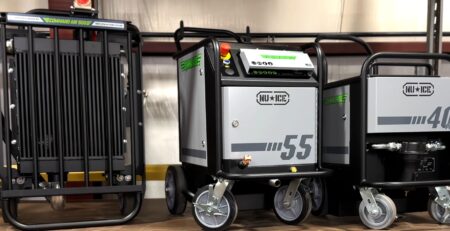
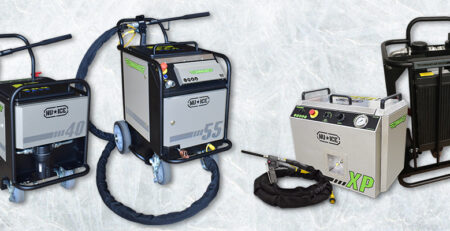
Nu-Ice manufactures COMMANDO® dry ice blasting machines for automotive and industrial cleaning applications.
Restoration professionals can explore the Nu-Ice Dry Ice Blasting Machines range to compare equipment options.
For additional information about vehicle restoration applications, visit our Historical Automotive Restoration resource.
Frequently Asked Questions
Is dry ice blasting good for car undercarriages?
Yes. Dry ice blasting can be useful for removing grease, road grime, and other surface contamination from suitable undercarriage components. It is particularly relevant for restoration projects where minimizing water exposure and preserving original finishes are priorities.
Can dry ice blasting remove undercoating?
Dry ice blasting may dislodge loose, deteriorated, or poorly adhered undercoating. However, it is not always suitable for removing sound or strongly bonded coatings. Results depend on the coating and equipment settings.
Does dry ice blasting remove rust from a car frame?
Dry ice blasting may remove loose contamination around corroded areas, but it generally does not remove firmly bonded rust as effectively as dedicated abrasive or mechanical rust removal methods.
Can dry ice blasting clean suspension components?
Yes. Suitable suspension components, including certain metal brackets and assemblies, may be cleaned using dry ice blasting. Rubber bushings, seals, and vulnerable coatings require additional precautions.
Does dry ice undercarriage cleaning leave residue?
The dry ice pellets sublimate and do not leave spent blasting media behind. However, removed grease, dirt, and other contaminants still need to be collected and disposed of appropriately.
Is dry ice blasting better than pressure washing for classic cars?
Dry ice blasting can be advantageous when minimizing water exposure and preserving suitable original finishes are important. Pressure washing remains useful for general cleaning when moisture exposure is acceptable.
How much does dry ice undercarriage cleaning cost?
The cost depends on the vehicle’s size, the severity of contamination, accessibility, local labor rates, and the equipment used. Professional service providers may price cleaning by the hour or by the project. Restoration businesses considering equipment ownership should also account for dry ice consumption, compressed air, maintenance, and operator time.
Restore and Maintain Vehicle Undercarriages With Nu-Ice
Cleaning a vehicle’s undercarriage is an important step in automotive restoration, maintenance, and inspection.
Dry ice blasting offers professional workshops an alternative method for removing road grime, grease, oil, and other contaminants from suitable underbody components without introducing water or conventional abrasive blasting media.
For classic car restoration specialists, the process can help expose original finishes, improve component visibility, and support careful restoration planning.
Nu-Ice manufactures American-made COMMANDO® dry ice blasting machines designed for a range of automotive and industrial cleaning applications.
Looking for dry ice blasting equipment for automotive restoration or undercarriage cleaning?
Explore our COMMANDO® Dry Ice Blasting Machines or contact the Nu-Ice team to discuss your workshop’s equipment requirements.