How Dry Ice Blasting Supports Asphalt Plant Cleaning & Maintenance
Asphalt plants operate in demanding industrial environments where aggregates, bitumen, dust, grease, and other production materials can accumulate on equipment. Over time, this contamination can make routine inspections more difficult, increase cleaning requirements, and interfere with access to critical machinery components.
For plant operators and maintenance teams, effective asphalt plant cleaning is an important part of preventive maintenance. Keeping suitable equipment surfaces clean helps technicians identify leaks, inspect mechanical assemblies, and address maintenance concerns before they become more serious.
Traditional asphalt plant cleaning methods often involve pressure washing, chemical cleaners, manual scraping, and mechanical removal. While these methods remain useful, they may introduce moisture, require additional cleanup, or be unsuitable for certain equipment components.
Dry ice blasting offers an alternative cleaning method that uses compressed air and solid carbon dioxide pellets to remove suitable surface contamination without introducing water or conventional abrasive blasting media.
This guide explores how dry ice blasting supports asphalt plant maintenance, the equipment it can clean, its benefits and limitations, and the precautions required for safe industrial cleaning.
What Is Dry Ice Blasting for Asphalt Plant Cleaning?
Dry ice blasting is an industrial cleaning process that uses compressed air to propel solid carbon dioxide (CO₂) pellets toward contaminated surfaces.
When the pellets strike a surface, they transfer kinetic energy and rapidly sublimate, changing directly from solid carbon dioxide into gas. This action helps loosen and dislodge contaminants from compatible materials.
Unlike conventional abrasive blasting, dry ice blasting does not introduce sand, grit, or other abrasive particles that must be collected after cleaning.
The process also does not require water as its cleaning medium.
For asphalt production equipment cleaning, dry ice blasting may be useful for removing:
- Grease and oil deposits on mechanical assemblies
- Dust and accumulated production debris
- Loose or moderately adhered surface contamination
- Residue around equipment housings and brackets
- Dirt around maintenance access points
- Certain asphalt-related deposits on compatible surfaces
However, dry ice blasting is not suitable for every type of contamination. Thick, hardened bitumen or strongly bonded asphalt deposits may require specialized removal methods.
For additional information about industrial cleaning applications, explore Nu-Ice’s Asphalt & Concrete Industry resource.
Why Is Regular Asphalt Plant Cleaning Important?
Asphalt production facilities contain numerous interconnected systems that must operate reliably during production.
Equipment exposed to dust, grease, aggregates, and bitumen-related contamination requires regular inspection and maintenance.
1. Supports Preventive Maintenance
Accumulated contamination can conceal developing maintenance problems.
Cleaning suitable equipment surfaces can make it easier to identify oil leaks, damaged fittings, deteriorated coatings, and other visible defects.
Routine cleaning supports preventive maintenance by improving access and visibility during inspections.
However, cleaning does not replace mechanical servicing, lubrication, calibration, or equipment-specific maintenance procedures.
2. Improves Equipment Accessibility
Asphalt plants contain machinery with complex frames, supports, external housings, and restricted maintenance areas.
Heavy contamination can make it difficult for technicians to access or inspect these components.
Removing suitable deposits can improve visibility around maintenance points and reduce the need for extensive manual scrubbing in certain applications.
3. Helps Manage Production Residue
Asphalt production generates dust and material deposits that can accumulate on accessible equipment surfaces.
When appropriate, dry ice blasting can help remove selected residues from compatible components.
This can support routine housekeeping and equipment maintenance without introducing water into the cleaning process.
4. Supports Planned Maintenance Shutdowns
Asphalt plant cleaning is often performed during scheduled maintenance periods when equipment is not operating.
Dry ice blasting may be incorporated into these shutdowns to clean selected machinery surfaces before inspection or servicing.
Because some components can potentially be cleaned while remaining installed, the process may reduce unnecessary disassembly.
Actual time savings depend on contamination severity, equipment access, preparation requirements, and the cleaning method selected.
Which Asphalt Plant Components Can Be Cleaned With Dry Ice Blasting?
Asphalt production facilities contain multiple types of equipment, each with different cleaning requirements.
Dry ice blasting may be considered for compatible external surfaces after evaluating contamination, component condition, and manufacturer restrictions.
Conveyor Frames and Material Handling Equipment
Conveyor systems transport aggregates and other materials throughout asphalt production facilities.
Their frames, brackets, supports, and accessible external assemblies may accumulate dust, grease, and production debris.
Dry ice blasting can help clean suitable metal surfaces without introducing water or conventional abrasive blasting media.
However, conveyor belts, rollers, bearings, seals, and electrical components require careful assessment.
Equipment must be shut down and isolated before cleaning.
Mixing Equipment and External Housings
Asphalt mixing equipment operates in environments where bitumen-related residue, dust, and other materials may accumulate.
Dry ice blasting may be useful for cleaning compatible external housings, support structures, and accessible mechanical components.
However, heavily bonded asphalt deposits inside mixing equipment may require mechanical or specialized cleaning methods.
Operators must also consider temperature, equipment design, and manufacturer cleaning instructions.
Aggregate Handling and Screening Equipment
Aggregate handling systems and screening machinery are exposed to substantial amounts of dust and production debris.
Dry ice blasting may help remove certain deposits from accessible metal housings, supports, and mechanical assemblies.
However, it is not necessarily the most practical method for removing large volumes of loose aggregate or dust.
Industrial vacuuming, mechanical removal, or other housekeeping methods may be more appropriate for bulk material cleanup.
Baghouse and Dust Collection System Components
Dust collection systems are important parts of asphalt plant operations.
Selected external housings, structural supports, and accessible non-sensitive components may be suitable for dry ice blasting.
However, filter bags, delicate internal assemblies, sensors, and other vulnerable components should not be blasted without explicit equipment manufacturer approval.
Dust collection systems may also contain combustible dust hazards depending on the materials involved. Appropriate hazard assessments and approved cleaning procedures are essential.
Hydraulic and Mechanical Assemblies
Hydraulic systems, gearboxes, and other mechanical assemblies can accumulate oil, grease, and dirt.
Dry ice blasting may help clean compatible external surfaces, improving visibility during maintenance inspections.
Hydraulic hoses, seals, electrical connectors, and exposed openings must be protected as appropriate.
Storage Tanks and External Pipework
Certain external tank surfaces, pipe supports, and accessible fittings may collect dust, grease, or environmental contamination.
Dry ice blasting may be considered for compatible surfaces when temperature, coating condition, and equipment restrictions permit.
It should not be assumed suitable for internal tank cleaning, pressurized systems, or hazardous-material environments without a specialized assessment.
Benefits of Dry Ice Blasting for Asphalt Plant Maintenance
1. Minimizes Water Exposure
Pressure washing can be effective for removing dirt and certain residues, but it introduces water into the cleaning process.
For some asphalt plant components, moisture exposure may create concerns around electrical assemblies, bearings, exposed metal surfaces, and areas that are difficult to dry.
Dry ice blasting does not use water as its cleaning medium.
This can be advantageous for selected maintenance applications where minimizing water exposure is important.
However, operators must still consider condensation, temperature changes, and component compatibility.
2. Reduces Secondary Blasting Media
Conventional abrasive blasting introduces additional material that must be collected after cleaning.
Dry ice pellets sublimate into carbon dioxide gas, leaving no spent dry ice blasting media behind.
This may simplify cleanup around complex equipment surfaces.
However, dislodged grease, dust, bitumen fragments, and other contaminants remain and require appropriate collection and disposal.
3. Helps Clean Difficult-to-Reach Areas
Asphalt production equipment often contains brackets, housings, frames, and irregular surfaces that are difficult to clean manually.
With suitable nozzle configurations and access, dry ice blasting can help remove contamination from some of these areas.
This may reduce the need for extensive manual scrubbing.
However, safe access, equipment isolation, and adequate working clearance remain necessary.
4. Supports More Effective Visual Inspections
Accumulated grease and dirt can obscure leaks, damaged components, and other maintenance concerns.
Removing contamination from compatible surfaces can improve visibility around mechanical assemblies and equipment structures.
This supports inspection but does not replace testing, servicing, or repair.
5. May Improve Cleaning Efficiency
For suitable contamination, dry ice blasting may reduce manual cleaning requirements and eliminate the need for water-based rinsing.
This can be useful during planned maintenance activities.
Nevertheless, the total cleaning time depends on the equipment, contamination, surface preparation, ventilation, and cleanup requirements.
How to Clean Asphalt Plant Equipment With Dry Ice Blasting
Professional asphalt plant cleaning should follow a controlled procedure based on the equipment manufacturer’s instructions and workplace safety requirements.
Step 1: Inspect the Equipment and Identify Contamination
Before cleaning, assess the machinery and determine which deposits need to be removed.
Identify:
- Grease and oil contamination
- Dust and production residue
- Hardened asphalt or bitumen deposits
- Loose or damaged coatings
- Exposed electrical connections
- Hydraulic hoses and vulnerable seals
- Hot surfaces
- Areas requiring additional protection
Determine whether dry ice blasting is suitable for the specific application.
Step 2: Shut Down and Isolate the Equipment
Asphalt plant machinery may contain moving parts, electrical systems, hydraulic pressure, stored energy, and hot surfaces.
Before cleaning, shut down and isolate equipment according to applicable lockout/tagout procedures.
Allow components to reach suitable temperatures and verify that hazardous energy has been controlled.
Ensure adequate ventilation and safe access to the work area.
Step 3: Prepare the Cleaning Area
Protect vulnerable components and establish appropriate containment for removed contamination.
Check that the cleaning area has sufficient space for the operator, blasting equipment, compressed-air supply, and required safety controls.
Where necessary, use carbon dioxide monitoring to assess ventilation conditions.
Step 4: Select Appropriate Blasting Settings
Configure the dry ice blasting machine according to the surface and contamination.
Important variables include:
- Blasting pressure
- Dry ice feed rate
- Nozzle type
- Nozzle distance
- Application angle
- Exposure time
- Compressed-air capacity
Begin with conservative settings and perform a test on a suitable area.
Step 5: Clean Compatible Equipment Surfaces
Direct the blasting stream toward appropriate surfaces using controlled nozzle movements.
Monitor how the contamination responds and avoid prolonged exposure to vulnerable materials.
If coatings begin to lift or components show signs of damage, stop and reassess the cleaning method.
Step 6: Collect Dislodged Contamination
Dry ice pellets sublimate, but removed dirt, grease, dust, and asphalt-related deposits remain.
These materials should be collected using appropriate containment, vacuuming, or other approved cleanup procedures.
Contaminated debris must be disposed of according to applicable requirements.
Step 7: Inspect and Return Equipment to Service
After cleaning, inspect the machinery for remaining contamination, coating damage, leaks, and other maintenance concerns.
Remove protective coverings and complete the required equipment checks.
Only return the machinery to operation after authorized personnel have completed the appropriate safety and maintenance procedures.
Can Dry Ice Blasting Remove Asphalt and Bitumen Buildup From Plant Equipment?
Dry ice blasting can help remove certain asphalt-related surface deposits, but its effectiveness depends on the characteristics of the contamination.
Bitumen and asphalt residues may become strongly bonded to machinery surfaces, particularly after repeated heating and cooling cycles.
Thin or less strongly adhered deposits may respond to dry ice blasting, while thick, hardened material may require mechanical scraping, specialized cleaning products, or other removal techniques.
Factors affecting cleaning performance include:
- Deposit thickness
- Surface temperature
- Material adhesion
- Underlying surface condition
- Blasting pressure and nozzle configuration
- Equipment accessibility
- Manufacturer restrictions
Dry ice blasting should be evaluated through controlled testing rather than assumed to remove every type of asphalt buildup.
For a broader discussion of machinery cleaning applications, read our guide to Dry Ice Blasting for Asphalt Equipment Cleaning & Maintenance.
Dry Ice Blasting vs. Traditional Asphalt Plant Cleaning Methods
Different cleaning methods are suited to different maintenance tasks.
| Cleaning Method | Advantages | Considerations |
| Dry Ice Blasting | No water or spent blasting media; useful for compatible surface contamination | Requires dry ice, compressed air, ventilation, and surface testing |
| Pressure Washing | Effective for many loose dirt and water-removable deposits | Introduces moisture and produces wastewater |
| Chemical Cleaning | Certain products can soften or dissolve specific residues | Requires chemical compatibility checks and appropriate waste handling |
| Manual Scraping | Useful for localized, strongly bonded deposits | Labor-intensive and may damage surfaces |
| Industrial Vacuuming | Effective for collecting loose dust and debris | Does not necessarily remove adhered grease or bitumen |
| Abrasive Blasting | Useful for selected coating removal and surface preparation | Can alter surfaces and produces spent blasting media |
Dry ice blasting is not a replacement for every industrial cleaning method.
Its value depends on the contamination, machinery condition, and maintenance objective.
Important Safety Precautions for Asphalt Plant Cleaning
Carbon Dioxide Ventilation
Dry ice sublimates into carbon dioxide gas.
In enclosed or poorly ventilated environments, CO₂ can accumulate and create an asphyxiation hazard.
Appropriate ventilation, workplace risk assessments, and CO₂ monitoring where necessary are essential.
Hot Equipment and Thermal Shock
Asphalt plant components may operate at elevated temperatures.
Cleaning must account for surface temperature, thermal stress, and material compatibility.
Hot machinery should not be blasted without evaluating equipment-specific risks and manufacturer restrictions.
Lockout/Tagout Procedures
Conveyors, mixers, motors, and other machinery must be isolated from hazardous energy before cleaning.
Operators should follow applicable lockout/tagout procedures and workplace safety requirements.
Dust and Hazardous Materials
Asphalt production environments may contain mineral dust, including respirable crystalline silica, and other hazardous contaminants.
Blasting can disturb deposited material and potentially make it airborne.
Suitable exposure controls, containment, respiratory protection where required, and appropriate cleaning methods must be established through a workplace risk assessment.
Personal Protective Equipment
Operators should use appropriate eye and face protection, hearing protection, suitable gloves, and other protective equipment required for the task.
Dry ice must be handled using appropriate insulated gloves.
Electrical and Sensitive Components
Electrical panels, exposed wiring, sensors, delicate filters, and vulnerable seals may be damaged by inappropriate blasting.
These components should be protected or cleaned using manufacturer-approved methods.
Choosing Dry Ice Blasting Equipment for Asphalt Plant Maintenance
Asphalt plant operators should select cleaning equipment based on their machinery, contamination, and maintenance requirements.
Important considerations include:
- Available compressed-air pressure and flow
- Adjustable blasting pressure
- Dry ice feed rate control
- Nozzle configurations for restricted access
- Equipment portability
- Dry ice availability and consumption
- Frequency of cleaning operations
- Surface compatibility
- Ventilation and workplace safety
- Maintenance and operating costs
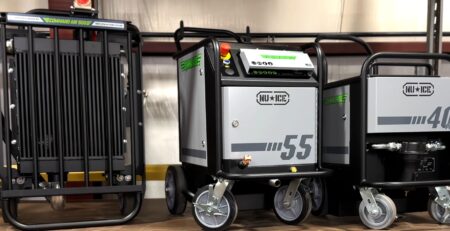
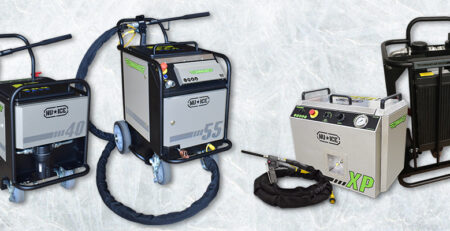
Nu-Ice manufactures American-made COMMANDO® dry ice blasting machines for industrial cleaning applications.
The COMMANDO® range provides options for maintenance teams evaluating dry ice blasting for suitable machinery surfaces.
Equipment selection should be based on actual cleaning requirements rather than assuming that one machine is appropriate for every asphalt plant application.
Explore Nu-Ice’s Dry Ice Blasting Machines or contact the team to discuss your plant’s cleaning requirements.
Frequently Asked Questions About Asphalt Plant Cleaning
What is the best way to clean asphalt plant equipment?
The best cleaning method depends on the equipment, contamination, and maintenance objective. Dry ice blasting may be suitable for grease, dirt, and certain surface deposits, while thick asphalt buildup may require mechanical or specialized removal methods.
Can dry ice blasting be used in asphalt plants?
Yes. Dry ice blasting may be used to clean compatible external machinery surfaces when appropriate safety procedures and equipment restrictions are followed.
Does dry ice blasting remove hardened bitumen?
Dry ice blasting may remove certain deposits, but thick or strongly bonded hardened bitumen can be difficult to remove. Alternative cleaning methods may be necessary.
Can dry ice blasting clean asphalt plant conveyors?
Dry ice blasting may be suitable for selected conveyor frames, brackets, and external components. Belts, bearings, seals, and electrical equipment require careful assessment and protection.
Is dry ice blasting better than pressure washing for asphalt plants?
Dry ice blasting may offer advantages when minimizing water exposure and wastewater generation is important. Pressure washing remains useful when moisture exposure is acceptable and the contamination responds to water-based cleaning.
Does dry ice blasting leave waste behind?
Dry ice pellets sublimate and do not leave spent blasting media behind. However, removed grease, dust, dirt, and other contaminants still require collection and disposal.
Can dry ice blasting reduce asphalt plant downtime?
Dry ice blasting may help streamline certain cleaning activities during planned maintenance shutdowns. Actual downtime savings depend on equipment accessibility, contamination, preparation, and required safety procedures.
Is dry ice blasting safe around asphalt plant electrical equipment?
Dry ice blasting does not introduce water as its cleaning medium, but it is not automatically safe for electrical systems. Exposed wiring, sensors, electrical panels, and other sensitive components must be assessed and protected according to manufacturer instructions.
Support Asphalt Plant Maintenance With Nu-Ice Dry Ice Blasting Equipment
Effective asphalt plant cleaning helps maintenance teams inspect machinery, manage accumulated contamination, and maintain accessible equipment surfaces.
Dry ice blasting provides an alternative for removing suitable grease, dirt, and production residue without introducing water or conventional abrasive blasting media.
While it is not appropriate for every asphalt-related deposit, the process can support preventive maintenance when applied to compatible equipment using proper operating procedures.
Nu-Ice manufactures American-made COMMANDO® dry ice blasting machines for a range of industrial cleaning applications.
Looking for dry ice blasting equipment for your asphalt production facility?
Explore our Dry Ice Blasting Machines or contact Nu-Ice to discuss your equipment requirements, maintenance applications, and available cleaning solutions.