Dry Ice Blasting vs. Sandblasting for Classic Car Restoration
Restoring a classic car involves removing years of accumulated dirt, grease, corrosion, and deteriorated coatings while protecting the vehicle’s original components.
Choosing the right cleaning method is one of the most important decisions in this process. Two options frequently considered by automotive restoration professionals are dry ice blasting and sandblasting.
Although both use compressed air to direct cleaning media toward a surface, they serve different purposes.
Dry ice blasting vs. sandblasting cars comes down to whether the restoration project requires removing surface contamination, preserving existing finishes, or stripping materials to prepare for refinishing.
Dry ice blasting is generally suited to cleaning grease, oil, road grime, and other deposits from compatible automotive surfaces. Sandblasting and other abrasive blasting techniques are typically more effective when the goal is to remove rust, paint, or coatings.
Understanding these differences can help restoration workshops select the appropriate method for each stage of a project.
What Is Dry Ice Blasting?
Dry ice blasting is a cleaning process that uses compressed air to propel solid carbon dioxide (CO₂) pellets toward a contaminated surface.
When the pellets strike the surface, they transfer energy and rapidly sublimate, changing directly from solid carbon dioxide into gas.
This process helps loosen and remove contaminants without leaving conventional abrasive blasting media behind.
Dry ice blasting is commonly considered for removing:
- Grease and oil
- Road grime and accumulated dirt
- Certain adhesives and surface residues
- Contamination around mechanical assemblies
- Deposits on suitable engine and undercarriage components
Unlike conventional abrasive blasting, dry ice blasting is generally intended to remove contamination rather than significantly alter the underlying surface.
However, its effectiveness and suitability depend on the equipment settings, material condition, and type of contamination.
For more information about automotive applications, explore Nu-Ice’s Historical Automotive Restoration resource.
What Is Sandblasting?
Sandblasting is a form of abrasive blasting that propels abrasive particles toward a surface using compressed air.
Although the term sandblasting is commonly used, professional abrasive blasting can involve different media, including crushed glass, garnet, aluminum oxide, and other materials selected for a specific application.
Abrasive blasting is frequently used in automotive restoration to remove:
- Rust and corrosion
- Old paint
- Deteriorated coatings
- Surface scale
- Strongly bonded deposits
It can also prepare metal surfaces for subsequent coating or refinishing.
Because abrasive blasting removes or changes surface material, operators must carefully select the blasting media, pressure, and technique.
Thin automotive panels, delicate components, and original finishes may be vulnerable to distortion or damage.
Traditional silica sand also presents serious respiratory hazards when used as blasting media. Professional operators should follow applicable occupational safety requirements and select suitable abrasives and exposure controls.
Dry Ice Blasting vs. Sandblasting: Key Differences
Both methods can be useful during automotive restoration, but they have different strengths.
| Feature | Dry Ice Blasting | Sandblasting / Abrasive Blasting |
| Primary purpose | Surface contamination removal | Rust, paint, coating removal, and surface preparation |
| Cleaning media | Solid CO₂ pellets | Abrasive particles |
| Grease and oil removal | Suitable for many deposits | May remove deposits, but oily contamination can interfere with blasting |
| Rust removal | Limited for firmly bonded rust | Generally effective with suitable media and settings |
| Paint preservation | Possible on sound coatings with appropriate settings | Generally not suitable when preserving existing paint |
| Surface profile | Typically minimizes changes to the underlying surface | Can intentionally create or change surface profile |
| Secondary blasting media | No spent dry ice media | Spent abrasive media must be managed |
| Moisture introduced | No water used as the cleaning medium | Typically dry, depending on the process |
| Waste handling | Removed contaminants still require collection | Spent abrasive and removed contaminants require collection |
| Main safety concerns | CO₂ accumulation, noise, cold exposure, airborne contaminants | Airborne dust, noise, abrasive rebound, and material-specific exposure hazards |
Neither method is universally better. The right choice depends on the restoration objective.
Which Method Is Better for Classic Car Paint?
Original paint is often an important part of a classic vehicle’s value and historical authenticity.
Restoration professionals may want to remove decades of accumulated dirt without stripping the original finish.
Dry Ice Blasting for Paint Preservation
Dry ice blasting may be useful for cleaning sound painted surfaces when suitable equipment settings are used.
Because the process does not rely on conventional abrasive media, it can remove certain contaminants while minimizing changes to the underlying finish.
However, dry ice blasting is not automatically safe for every painted surface.
Old paint may have weakened adhesion, hidden corrosion, previous repairs, or deterioration that makes it vulnerable to damage.
Operators should begin with conservative settings and test an inconspicuous area before cleaning.
Sandblasting for Paint Removal
Abrasive blasting is more appropriate when the objective is to remove existing paint and prepare metal for refinishing.
However, aggressive blasting can damage thin automotive panels, alter surface texture, or cause distortion.
For delicate body panels, restoration professionals may choose specialized low-impact abrasive techniques or alternative stripping methods.
Best choice: Dry ice blasting may be preferable for cleaning and preserving sound original paint, while abrasive blasting is more appropriate when coating removal is required.
Dry Ice Blasting vs. Sandblasting for Rust Removal
Rust removal is one of the biggest differences between these two methods.
Can Dry Ice Blasting Remove Rust?
Dry ice blasting can remove dirt, grease, and loose contamination around corroded areas.
This may help restoration professionals identify rust and evaluate the condition of the underlying metal.
However, dry ice blasting is generally not effective for removing heavy or firmly bonded corrosion.
It should not be considered a complete rust treatment or metal preparation process.
Is Sandblasting Better for Removing Rust?
Abrasive blasting is typically more effective for removing rust from suitable metal surfaces.
The abrasive particles mechanically remove corrosion and can prepare the surface for subsequent protective coatings.
However, blasting pressure and media selection must be appropriate for the metal thickness and component condition.
Best choice: Abrasive blasting is generally more suitable for rust removal, while dry ice blasting can support cleaning and inspection before corrosion treatment.
Which Method Is Better for Engine Bay Cleaning?
Engine compartments contain metal housings, wiring, hoses, brackets, plastic covers, painted components, and other materials.
They also accumulate oil, grease, road dirt, and mechanical residue.
Dry Ice Blasting Engine Bays
Dry ice blasting can be useful for cleaning suitable external engine components because it removes many types of contamination without introducing water or spent abrasive blasting media.
Applications may include:
- External engine blocks
- Metal brackets and housings
- Transmission components
- Suitable painted surfaces
- Accessible mechanical assemblies
Sensitive wiring, electronic components, aging rubber, and deteriorated coatings still require protection.
Sandblasting Engine Components
Abrasive blasting can be useful when individual metal components need rust removal or refinishing.
However, abrasive media can enter openings, damage sensitive surfaces, or remain trapped in mechanical assemblies.
For this reason, abrasive blasting is generally better suited to appropriately prepared or disassembled components rather than an assembled engine compartment.
Best choice: Dry ice blasting is often more suitable for cleaning an assembled engine bay, while abrasive blasting may be appropriate for individual components requiring surface preparation.
Dry Ice Blasting vs. Sandblasting for Undercarriage Restoration
The underside of a classic car can accumulate decades of road grime, oil, grease, deteriorated coatings, and corrosion.
The appropriate cleaning method depends on whether the goal is inspection, preservation, or refinishing.
Dry Ice Blasting for Undercarriage Cleaning
Dry ice blasting can help remove accumulated contamination from suitable chassis components, suspension assemblies, wheel wells, and metal housings.
This may expose original finishes and improve visibility during restoration inspections.
It can also reduce the need for water-based cleaning in certain applications.
However, deteriorated undercoating and loose paint may be dislodged, and heavy rust will generally require another treatment.
Sandblasting for Chassis Restoration
Abrasive blasting is commonly used when chassis components require substantial rust removal, coating removal, or preparation for repainting.
It can be effective on suitable metal structures, but care is necessary around thin metal, vulnerable components, and areas where abrasive particles may become trapped.
Best choice: Dry ice blasting is useful for cleaning and inspecting an undercarriage, while abrasive blasting is generally more appropriate for extensive rust removal and refinishing preparation.
Does Dry Ice Blasting Create Less Waste Than Sandblasting?
One of the main operational differences between these methods is the handling of blasting media.
Dry ice pellets sublimate into carbon dioxide gas after impact. As a result, they do not leave spent dry ice media behind.
Sandblasting and other abrasive blasting methods generate spent abrasive particles that must be collected along with removed coatings and contamination.
However, dry ice blasting is not a waste-free process.
Removed grease, dirt, paint fragments, and other materials still require appropriate collection and disposal.
Dry ice blasting also releases carbon dioxide gas, so ventilation and workplace safety controls are essential.
The environmental impact of either process depends on the source of materials, energy consumption, waste handling, and application.
Which Method Is More Cost-Effective?
The cost of dry ice blasting versus sandblasting depends on the type of work being performed.
Dry Ice Blasting Costs
Dry ice blasting expenses may include:
- Equipment purchase or rental
- Dry ice pellets
- Compressed-air supply
- Operator labor
- Equipment maintenance
- Ventilation and safety controls
- Contaminant collection and disposal
Dry ice blasting may reduce certain cleanup tasks because there is no spent blasting media to collect.
However, dry ice and compressed-air requirements contribute to ongoing operating costs.
Sandblasting Costs
Abrasive blasting expenses may include:
- Blasting equipment
- Abrasive media
- Compressed-air supply
- Operator labor
- Surface protection and containment
- Dust collection
- Spent abrasive disposal
- Equipment maintenance
Abrasive blasting may be more economical when extensive rust or coating removal is necessary.
Dry ice blasting may be advantageous when surface preservation, reduced media cleanup, or cleaning of assembled components is the priority.
The most cost-effective method depends on the specific restoration task rather than the cleaning technology alone.
Can You Use Both Dry Ice Blasting and Sandblasting During Restoration?
Yes. Many restoration projects benefit from using different cleaning methods at different stages.
For example, a restoration workshop might use dry ice blasting to remove accumulated grease and dirt before inspecting a classic car’s undercarriage.
Once the surface is clean, technicians can identify areas with corrosion or deteriorated coatings.
Abrasive blasting may then be used selectively on suitable components that require rust removal or surface preparation.
After repairs and refinishing, additional cleaning methods may be used as appropriate.
Combining methods allows restoration professionals to match the cleaning technique to the condition and requirements of each component.
Choosing Dry Ice Blasting Equipment for Automotive Restoration
For professional restoration workshops, equipment selection should reflect the types of vehicles and components being cleaned.
Important considerations include:
- Adjustable blasting pressure
- Dry ice feed rate control
- Nozzle options
- Equipment portability
- Compressed-air requirements
- Dry ice availability
- Frequency of cleaning projects
- Workshop ventilation and safety requirements
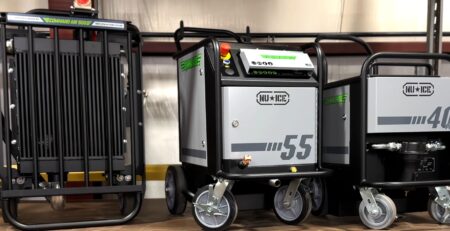
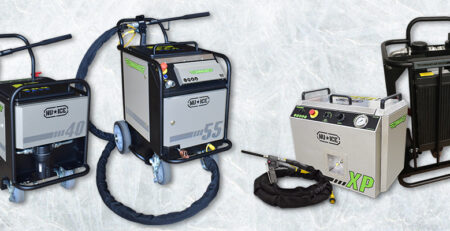
Nu-Ice manufactures COMMANDO® dry ice blasting machines for automotive and industrial cleaning applications.
The COMMANDO® equipment range provides options for businesses looking to incorporate dry ice blasting into their restoration and maintenance workflows.
Explore the Nu-Ice Dry Ice Blasting Machines to learn more about available equipment.
Frequently Asked Questions
Is dry ice blasting better than sandblasting for cars?
Dry ice blasting is generally more suitable for removing surface contamination while attempting to preserve existing finishes. Sandblasting is typically more effective for removing rust, paint, and coatings. The best method depends on the restoration objective.
Can dry ice blasting remove automotive paint?
Dry ice blasting can dislodge weakened or poorly adhered paint, but it is not generally intended as a primary method for stripping sound automotive coatings. Abrasive blasting and other stripping techniques are usually more appropriate for deliberate paint removal.
Can dry ice blasting remove rust?
Dry ice blasting can remove loose contamination around rusted surfaces, but it generally does not remove firmly bonded corrosion effectively.
Does sandblasting damage classic cars?
Improper abrasive blasting can damage thin metal panels, alter surface texture, or remove finishes that should be preserved. Professional media selection and careful technique are essential.
Is dry ice blasting safe for aluminum engine parts?
Dry ice blasting can be suitable for certain aluminum components when appropriate settings are used. However, delicate finishes, coatings, and component condition must be evaluated before cleaning.
Is dry ice blasting more expensive than sandblasting?
Costs vary depending on equipment, media consumption, labor, cleanup, and the type of restoration work. Neither method is consistently cheaper for every application.
Can dry ice blasting and sandblasting be used together?
Yes. Dry ice blasting can be used for cleaning and inspection, while abrasive blasting can be used selectively for rust removal and surface preparation where appropriate.
Find the Right Cleaning Equipment for Your Restoration Workshop
Choosing between dry ice blasting and sandblasting depends on what you need to accomplish.
For classic car restoration projects involving grease, road grime, engine bay contamination, and preservation of suitable original finishes, dry ice blasting can provide an effective alternative to conventional abrasive cleaning.
For heavy corrosion, coating removal, and metal surface preparation, abrasive blasting may be the better option.
Understanding the strengths and limitations of each method helps restoration professionals protect valuable components and select the right equipment for each task.
Nu-Ice manufactures American-made COMMANDO® dry ice blasting machines for automotive restoration and industrial cleaning applications.
Interested in adding dry ice blasting to your automotive restoration workflow?
Explore our COMMANDO® Dry Ice Blasting Machines or contact Nu-Ice to discuss your equipment requirements.