Best Dry Ice Blasting Machine for Automotive Restoration: Buyer’s Guide
Choosing the best dry ice blasting machine for automotive restoration requires more than comparing equipment prices or cleaning power. For professional automotive detailers, classic car restoration specialists, and workshop owners, the right equipment should deliver effective cleaning while helping protect valuable vehicle components.
From removing grease in engine compartments to cleaning accumulated road grime beneath a vehicle, dry ice blasting offers a practical alternative to conventional pressure washing, chemical degreasing, and abrasive blasting for many automotive applications.
However, not every dry ice blasting machine for cars offers the same capabilities. Factors such as adjustable pressure, dry ice consumption, compressor compatibility, nozzle selection, and portability can significantly influence cleaning performance and operating costs.
This guide explains what to look for when purchasing an automotive dry ice blaster, compares equipment considerations for different restoration applications, and explores Nu-Ice COMMANDO® dry ice blasting machines.
What Is a Dry Ice Blasting Machine for Cars?
A dry ice blasting machine is specialized cleaning equipment that uses compressed air to accelerate solid carbon dioxide (CO₂) pellets toward a contaminated surface.
Upon impact, the pellets help dislodge dirt, grease, oil, and other surface deposits before sublimating directly into carbon dioxide gas. Unlike conventional abrasive blasting, the process does not leave spent blasting media behind.
For automotive restoration professionals, this technology provides several practical advantages:
- Water-free cleaning: Removes many contaminants without introducing water as the cleaning medium.
- Surface preservation: Can clean suitable original finishes without intentionally stripping paint or altering the underlying material.
- Reduced media cleanup: Dry ice pellets sublimate, although removed contamination must still be collected.
- Versatile applications: Can be used on compatible engine components, chassis assemblies, suspension parts, and other automotive surfaces.
- Improved inspection: Removing accumulated grime can make leaks, corrosion, and deteriorated components easier to identify.
Dry ice blasting is not suitable for every automotive surface. Operators must assess component condition, use appropriate equipment settings, and protect vulnerable materials before cleaning.
For a broader explanation of the process, explore Nu-Ice’s Historical Automotive Restoration resource.
Why Use Dry Ice Blasting Equipment for Automotive Restoration?
Automotive restoration frequently involves cleaning vehicles with aging materials, original finishes, and components that require careful handling.
Traditional cleaning techniques remain useful, but dry ice blasting offers an alternative when reducing moisture exposure or preserving compatible surfaces is a priority.
1. Cleaning Engine Bays and Mechanical Components
Engine compartments accumulate oil, grease, dust, and road grime over time. These deposits can make mechanical inspections and maintenance more difficult.
Dry ice blasting can help clean suitable external engine components, including:
- Engine blocks and metal housings
- Transmission casings
- Metal brackets and mounting points
- Accessible mechanical assemblies
- Compatible painted surfaces
Unlike pressure washing, dry ice blasting does not use water as its cleaning medium. However, exposed electronics, deteriorated wiring, fragile seals, and other sensitive components must still be protected.
2. Cleaning Vehicle Undercarriages
A vehicle’s undercarriage is exposed to road debris, oil, grease, mud, and environmental contaminants.
Dry ice blasting can help remove these deposits from compatible chassis components, suspension assemblies, wheel wells, and metal housings.
For classic car restoration, this can be particularly useful when technicians need to inspect original underbody finishes or identify areas requiring repair.
However, dry ice blasting is primarily a cleaning method. Heavy rust and firmly bonded corrosion generally require dedicated rust removal techniques.
3. Preserving Original Automotive Finishes
Original paint, factory coatings, and historical markings can contribute to the authenticity and value of a classic vehicle.
Compared with conventional abrasive blasting, dry ice blasting can be a less aggressive option for removing surface contamination from sound finishes.
Cleaning results depend on surface condition and equipment settings. Deteriorated coatings, brittle plastics, aging rubber, and poorly adhered paint may still be damaged.
4. Improving Workshop Efficiency
Manual cleaning can be time-consuming, especially around complicated mechanical assemblies and hard-to-reach surfaces.
Dry ice blasting may reduce the amount of scrubbing and disassembly required for certain cleaning tasks.
For restoration workshops handling regular cleaning projects, this can help streamline preparation and inspection.
Actual time savings depend on the vehicle, contamination level, equipment configuration, and operator experience.
What to Look for in the Best Dry Ice Blasting Machine for Cars
Selecting an automotive dry ice blaster involves balancing cleaning performance, surface compatibility, operating costs, and workshop requirements.
The following features should be considered before purchasing equipment.
Adjustable Blasting Pressure
Different automotive surfaces require different cleaning intensities.
A metal engine housing covered in grease may tolerate a different cleaning approach than an original painted bracket or delicate restoration component.
Adjustable blasting pressure allows operators to adapt the process to the surface and contamination being cleaned.
Higher pressure does not necessarily mean better results. Excessive blasting intensity can damage vulnerable coatings or components.
Dry Ice Feed Rate Control
Dry ice feed rate determines how much blasting media is delivered during operation.
Machines with adjustable feed settings can help operators match dry ice consumption to the cleaning task.
This is particularly useful for workshops that alternate between detailed component cleaning and larger automotive surfaces.
Controlling media consumption may also help manage operating expenses.
Nozzle Selection and Accessories
Automotive restoration often involves cleaning surfaces with limited accessibility.
Suitable nozzles and accessories can help operators reach areas such as:
- Engine compartments
- Suspension assemblies
- Chassis brackets
- Wheel wells
- Transmission housings
- Tight mechanical spaces
Before purchasing, confirm which nozzle configurations and accessories are compatible with the machine.
Air Compressor Compatibility
Compressed-air requirements are among the most important considerations when choosing dry ice blasting equipment.
Each machine has specific operating requirements, including air pressure and airflow capacity.
Before purchasing, check:
- Required operating pressure
- Airflow requirements measured in CFM
- Compressor output at the required pressure
- Compressor duty cycle
- Air quality and moisture control
- Hose and connection compatibility
An existing workshop compressor may not provide sufficient airflow for the selected equipment.
Always verify the manufacturer’s specifications rather than assuming a compressor is compatible.
Portability and Equipment Size
Equipment portability can influence how efficiently a workshop operates.
Smaller automotive detailing facilities may prioritize compact equipment that can be moved between vehicles.
Larger restoration workshops may place greater importance on sustained operating capacity and hose accessibility.
Mobile cleaning businesses must also consider transporting the machine, compressor, dry ice, and supporting equipment.
Dry Ice Consumption and Availability
Dry ice pellets are consumable materials that must be replenished regularly.
Because dry ice gradually sublimates during storage, businesses should consider local supply availability, delivery schedules, storage arrangements, and expected consumption.
A machine’s purchase price should therefore be evaluated alongside its ongoing operating requirements.
Which Dry Ice Blasting Machine Is Best for Different Automotive Applications?
The ideal equipment configuration depends on the type and frequency of automotive cleaning work.
| Automotive Application | Features to Prioritize |
| Classic car restoration | Adjustable settings, precision cleaning, surface compatibility |
| Engine bay cleaning | Controlled pressure, suitable nozzles, manageable equipment size |
| Undercarriage cleaning | Cleaning capacity, hose reach, accessibility |
| Automotive detailing | Portability, flexible settings, operating efficiency |
| High-volume restoration | Reliable pellet feeding, sustained operating capacity |
| Mobile automotive cleaning | Transportability, compressor compatibility, dry ice supply |
These considerations can help narrow down equipment options, but buyers should always compare actual machine specifications before making a final decision.
Nu-Ice COMMANDO® Dry Ice Blasting Machines for Automotive Restoration
Nu-Ice manufactures American-made COMMANDO® dry ice blasting machines for a range of industrial and automotive cleaning applications.
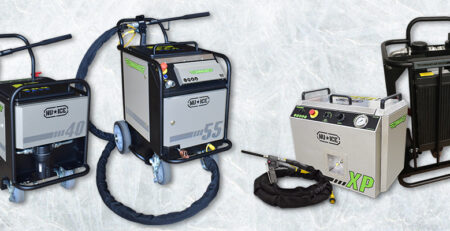
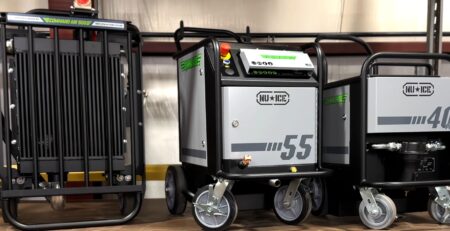
The COMMANDO® equipment range includes several models that restoration professionals can evaluate based on their cleaning requirements, available compressed-air capacity, and operating conditions.
COMMANDO® 35 Dry Ice Blaster
The COMMANDO® 35 is one of the machines automotive restoration businesses can consider when evaluating dry ice blasting equipment.
Workshops interested in detailed cleaning applications should review its operating settings, compressed-air requirements, compatible accessories, and overall equipment dimensions.
Buyers should confirm whether its capabilities match their intended automotive applications before purchasing.
COMMANDO® 40 PRO Dry Ice Blaster
The COMMANDO® 40 PRO is another option within the Nu-Ice dry ice blasting equipment range.
Automotive businesses considering this model should evaluate its operating specifications, available accessories, and compatibility with their workshop’s compressed-air supply.
For restoration facilities handling a combination of engine components, undercarriages, and general automotive cleaning, equipment flexibility is an important purchasing consideration.
COMMANDO® 55 Dry Ice Blaster
The COMMANDO® 55 is part of Nu-Ice’s broader dry ice blasting equipment lineup.
Businesses with recurring automotive or industrial cleaning requirements can evaluate this machine based on its operating capacity, dry ice consumption, and available equipment configurations.
The appropriate choice depends on the workshop’s cleaning workload and available infrastructure.
COMMANDO® 80 Dry Ice Blaster
The COMMANDO® 80 is another machine within Nu-Ice’s industrial dry ice blasting range.
Restoration facilities with larger cleaning requirements can compare this model with other COMMANDO® machines to determine which equipment configuration best matches their applications.
Buyers should review current specifications, compressed-air requirements, and operating costs before selecting a machine.
How to Choose the Right COMMANDO® Machine
There is no single dry ice blasting machine that is ideal for every automotive restoration business.
A workshop specializing in occasional classic car detailing may have different requirements from a facility performing regular engine bay and undercarriage cleaning.
Before choosing a COMMANDO® machine, consider:
- The types of automotive surfaces being cleaned
- Frequency and duration of cleaning projects
- Available compressor pressure and airflow
- Required nozzle configurations
- Dry ice availability and consumption
- Equipment portability
- Maintenance requirements
- Overall purchase and operating costs
Explore the complete Nu-Ice Dry Ice Blasting Machines range to review available equipment and identify options for your workshop.
How Much Does a Dry Ice Blasting Machine for Cars Cost?
The cost of automotive dry ice blasting equipment varies depending on the machine’s capabilities, included accessories, and operating requirements.
Rather than evaluating purchase price alone, businesses should calculate the total cost of ownership.
Important expenses include:
- Equipment purchase: The machine, hoses, nozzles, and required accessories.
- Air compressor: A compatible compressed-air supply capable of meeting the machine’s operating requirements.
- Dry ice pellets: Regular media purchases, delivery, storage, and sublimation losses.
- Operator training: Training in equipment operation, surface compatibility, ventilation, and workplace safety.
- Maintenance: Routine servicing, replacement parts, and equipment upkeep.
- Operating expenses: Energy consumption, labor, ventilation, and contaminant collection.
Businesses should request current equipment pricing and specifications directly from the manufacturer.
Is Buying a Dry Ice Blasting Machine Worth It for Automotive Detailing?
For professional automotive detailers and restoration workshops, purchasing dry ice blasting equipment may be worthwhile when customer demand and cleaning frequency justify the investment.
Owning equipment can provide greater control over scheduling and may allow businesses to expand their cleaning services.
Potential applications include:
- Classic car restoration preparation
- Engine bay cleaning
- Undercarriage cleaning
- Mechanical component cleaning
- Vehicle detailing
- Restoration inspection preparation
However, equipment ownership also introduces ongoing costs for dry ice, compressed air, maintenance, and operator labor.
Before investing, businesses should estimate how frequently the equipment will be used and whether expected revenue can support the total operating expenses.
For occasional projects, outsourcing dry ice blasting services may be more practical.
Common Mistakes to Avoid When Buying Automotive Dry Ice Blasting Equipment
Choosing the wrong equipment can increase operating costs and limit cleaning performance.
Buying Without Checking Compressor Requirements
A machine may offer suitable cleaning capabilities but require more compressed air than the workshop can supply.
Always compare the equipment’s required airflow and pressure with the compressor’s actual output.
Choosing Equipment Based Only on Price
The lowest purchase price does not necessarily represent the lowest operating cost.
Consider dry ice consumption, maintenance, accessories, compressor requirements, and expected equipment utilization.
Assuming Higher Pressure Is Always Better
Automotive restoration often involves delicate components and original finishes.
Excessive blasting pressure can damage vulnerable surfaces. Adjustable settings and proper operator technique are important.
Overlooking Nozzle Compatibility
Different automotive cleaning tasks require different access angles and cleaning patterns.
Confirm that suitable nozzles and accessories are available for the intended applications.
Ignoring Ventilation and Safety Requirements
Dry ice sublimates into carbon dioxide gas, which can accumulate in poorly ventilated areas and create a serious asphyxiation hazard.
Workshops must provide appropriate ventilation, assess CO₂ exposure risks, and follow equipment safety instructions.
Operators should also use suitable personal protective equipment and establish procedures for collecting removed contaminants.
Frequently Asked Questions (FAQ)
What is the best dry ice blasting machine for automotive restoration?
The best dry ice blasting machine depends on the workshop’s cleaning requirements, compressed-air capacity, and budget. Automotive restoration businesses should prioritize adjustable settings, compatible nozzles, manageable operating costs, and equipment suited to their intended applications.
How much does a dry ice blasting machine for cars cost?
Prices vary depending on the manufacturer, machine capabilities, and included accessories. Buyers should also account for compressor requirements, dry ice consumption, maintenance, and operator training when calculating the total investment.
Can a dry ice blasting machine clean car engines?
Yes. Dry ice blasting can remove grease, oil, and accumulated grime from suitable external engine components. Sensitive electrical connections, fragile materials, and deteriorated coatings require careful assessment and protection.
Is dry ice blasting safe for classic cars?
Dry ice blasting can be suitable for cleaning classic vehicles when appropriate settings are used on compatible surfaces. However, aging paint, brittle plastics, deteriorated rubber, and delicate components may be vulnerable to damage.
What size air compressor is needed for dry ice blasting?
The required compressor capacity depends on the machine’s operating specifications. Buyers should confirm the required airflow in CFM and operating pressure, then ensure their compressor can supply both during continuous use.
Can dry ice blasting remove rust from automotive parts?
Dry ice blasting can remove dirt and loose contamination around corroded surfaces, but it is generally not effective for removing heavy or firmly bonded rust. Abrasive blasting or other dedicated rust removal methods may be necessary.
Is a dry ice blasting machine worth buying for a detailing business?
Purchasing equipment may be worthwhile for businesses with consistent demand for specialized automotive cleaning. The decision should consider expected revenue, frequency of use, dry ice consumption, compressor costs, and ongoing maintenance expenses.
Ready to Find the Right Dry Ice Blasting Equipment?
Choosing the right dry ice blasting machine can help automotive restoration professionals improve cleaning efficiency, support detailed vehicle inspections, and expand their workshop capabilities.
Whether your business specializes in classic car restoration, engine bay cleaning, or undercarriage maintenance, selecting equipment that matches your cleaning requirements is essential.
Nu-Ice manufactures American-made COMMANDO® dry ice blasting machines for professional automotive and industrial cleaning applications.
Looking for dry ice blasting equipment for your automotive workshop?
Browse Dry Ice Blasting Equipment or Contact Nu-Ice to discuss your applications, equipment requirements, and available options.